Driveway materials
Resin driveways
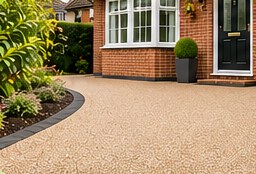
What is resin?
Resin driveways are made from small natural stones held together with clear resin. There are two types: resin-bound, where the stone and resin are mixed and trowelled smooth, and resin-bonded, where stone is scattered onto a layer of resin. Most new driveways are resin-bound.
Pros
- Pro: Smooth, even surface that's easy on buggies and wheelchairs
- Pro: Low maintenance – a sweep and an occasional wash
- Pro: Resin-bound is permeable, so water drains through
- Pro: Wide choice of stone colours and blends
Cons
- Con: Needs a sound, well-prepared base – it's only as good as what's underneath
- Con: Quality depends heavily on the installer and the resin used (look for UV-stable resin)
- Con: Repairs can be hard to colour-match
- Con: Resin-bonded is not permeable
Planning and drainage
Resin-bound surfaces are permeable, so they don't normally need planning permission in a front garden. Resin-bonded surfaces aren't permeable, so the planning rule below applies.
How long does it last?
A well-laid resin-bound driveway on a good base should last many years. Ask each installer what guarantee they give – it's a good sign of the quality they expect.
The front garden planning rule
In England, if you pave more than 5 m² of front garden with an impermeable surface that drains onto the road, you need planning permission. Permeable surfaces – or impermeable ones that drain to a lawn or border – don't need it.
Source: Planning Portal – paving your front garden (last checked 14 November 2026). Rules differ for listed buildings, conservation areas and flats.
Frequently asked questions
Do I need planning permission for a resin driveway?
Usually not if it's resin-bound, because it's permeable. Resin-bonded isn't permeable, so in a front garden over 5 m² it would need to drain to a lawn or border, or you'd need permission.
Can resin be laid over my existing driveway?
Sometimes. If your current tarmac or concrete is sound, an installer may be able to lay over it. If it's cracked or sinking, it will need to come up first. The site survey will tell you.
How do I look after a resin driveway?
Sweep it regularly and give it an occasional wash. Avoid leaving oil spills or burning substances on it.
Ready to get started?
Get an instant price estimate and be matched with up to 3 vetted local installers.